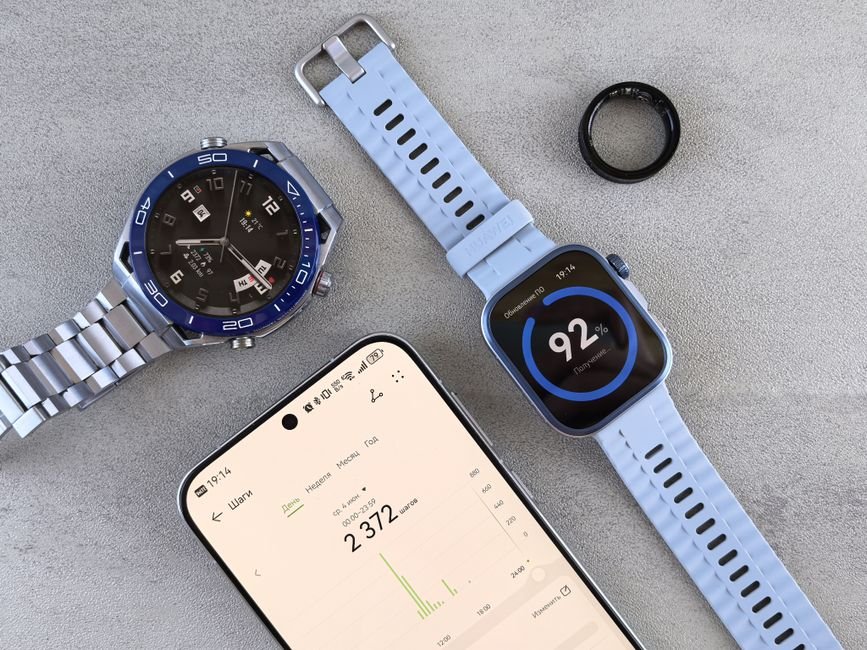
Somewhere in the last two years, “which watch should I buy” quietly turned into “watch, band, or ring.” Oura made the ring a status symbol. Whoop turned the subscription band into a cult. Apple, Samsung, and Huawei kept building watches that do everything except make you coffee. And now everyone with a step count and a sleep score wants to know: smart ring vs smartwatch, which one is actually worth strapping (or slipping) onto your body every day?
I’ve watched enough people buy the wrong one, wear it for three weeks, and let it die in a drawer to have an opinion here. The honest answer is that most people buy based on the wrong variable. They buy based on hype, not on how they actually live. So let’s fix that.
The real difference isn’t features, it’s friction
Every comparison chart online lists specs: heart rate accuracy, SpO2, sleep staging, battery life. Those numbers matter less than you think, because the top devices in each category are all within a few percentage points of each other on raw accuracy. The variable that actually determines whether you keep wearing the thing is friction: how much does it ask of you, and how much does it get in the way of your day.
A smartwatch is a notification hub, a payment device, a fitness tracker, and increasingly a small computer on your wrist. That means more friction: you have to charge it more often, you have to think about whether it matches what you’re wearing, and you have to actually look at it, which pulls your attention.
A smart ring is built to disappear. No screen to check compulsively, no strap to snag on a sleeve, a battery that lasts four to seven days instead of one. The tradeoff is that it can only whisper to you, usually through an app the next morning, never in the moment.
Where the smartwatch still wins outright
If your use case involves real-time information or interaction, the ring is not in the running. That includes:
- Workout tracking with live pace, heart rate zones, or GPS maps mid-run
- Notifications and quick replies you actually want to see, not just log
- Contactless payments and transit cards
- Anyone who trains for a specific sport where segment-by-segment data changes how you pace the next mile
- Anyone who wants one device instead of a phone-plus-wearable combo for a short workout or errand
The Apple Watch, Samsung Galaxy Watch, and Huawei Watch GT line all do this well now, and Huawei in particular has closed the gap on battery life with hybrid models that sip power in daily mode and only drain fast when GPS is active. If you are the kind of person who checks a screen fifty times a day anyway, a smartwatch is not adding friction, it is just moving friction you already have.
Where the ring quietly wins
The ring’s entire pitch is passive data: sleep, recovery, resting heart rate, and trends over weeks, not minutes. That’s a genuinely different job than a smartwatch does, and for a specific kind of person it’s the better job.
If you’ve ever taken off a smartwatch to charge it overnight and missed a night of sleep data, you already understand the ring’s advantage. Rings are designed to be worn to bed, in the shower, and basically forgotten, which means the sleep and recovery data is actually complete instead of full of gaps. For anyone managing a chronic condition, training fatigue, or just trying to understand why some weeks feel worse than others, a complete dataset beats a flashier one with holes in it.
The catch that nobody puts on the box: most rings still lean on a subscription to unlock the full insights (Oura’s is roughly $70 a year at the time of writing), so the sticker price is not the real price. Read the fine print before you buy, or you’ll end up with a $300 ring that nags you to subscribe just to see your own sleep score properly.
The step-tracker phone app is the tell
Look at any phone’s built-in step counter (Health on iPhone, Health Connect or Samsung Health on Android) and you’ll notice it already tracks steps reasonably well with zero extra hardware. That single fact quietly disqualifies “I just want to count my steps” as a reason to buy either device. If step count is genuinely your only goal, save the money. The wearable conversation only starts to matter once you want heart rate trends, sleep staging, recovery scores, or real-time workout metrics that a phone in your pocket cannot capture.
A simple way to decide
Skip the spec sheets and ask yourself three questions instead:
- Do I want to glance at my wrist during the day, or would I rather check an app once in the morning? Glance-and-go people want a watch. Once-a-day people want a ring.
- Do I train with structured workouts (intervals, pacing, live heart rate zones)? If yes, get a watch. Rings cannot give you that in the moment.
- Will I actually remember to charge a watch every night? Be honest. If the answer is “probably not,” the ring’s four-to-seven-day battery will win the long game, because the best wearable is the one still on your body in six months.
There’s also a combination answer that more people should consider: wearing a ring for sleep and recovery and reserving a watch for the days you actually train hard. It sounds like overkill until you realize the alternative is buying one device that’s mediocre at both jobs instead of two devices that are each excellent at one.
What I’d actually tell a friend
If someone is deciding right now, here’s the shortcut. Buy a smartwatch if you want one device that replaces your wallet, your notifications, and your workout computer. Buy a smart ring if you’ve tried a smartwatch before and stopped wearing it because it felt like one more screen demanding attention. And if you’re not sure, don’t buy either yet. Use your phone’s free health app for a month, notice what data you actually check versus ignore, and let that answer the question for you before you spend anything.
The takeaways
- Smartwatches win on real-time data, payments, and structured training; rings win on passive, complete overnight data
- Most rings hide a subscription behind the hardware price, so check the real annual cost before buying
- If step counting is your only goal, your phone already does that for free
- The best wearable is the one you’ll still be wearing in six months, not the one with the longest spec sheet
- Consider pairing a ring for sleep with a watch for workouts instead of forcing one device to do both jobs
Is a smart ring as accurate as a smartwatch for heart rate?
For resting heart rate and sleep, yes, rings are generally just as accurate and sometimes more consistent because they sit still against the finger. For live workout heart rate during fast movement, wrist-based watches with real-time displays are still more useful because you can see the number as it happens.
Do smart rings work without a subscription?
Most will still show basic metrics like steps and heart rate without one, but the deeper insights (readiness scores, detailed sleep staging, trend analysis) are usually locked behind a monthly or yearly fee. Always check the subscription terms before buying, since it changes the real cost significantly.
Can I just use my phone instead of buying either one?
If all you want is step count and basic activity tracking, yes, your phone’s built-in health app already does that with no extra hardware. You only need a dedicated wearable once you want continuous heart rate, sleep staging, or real-time workout metrics your phone can’t capture from your pocket.
Image: Pexels
Related reading:
- The Best AI Smart Glasses Under $100 You Can Actually Buy Right Now
- AI Glasses in 2026: Are Halliday and Meta Ray-Bans Worth the Money?
- Smart Takes on Tech, AI and Gadgets: What Is Worth Your Money in 2026
If gadget breakdowns like this are useful, follow Osato Tech and AI for more honest, no-hype takes on what’s actually worth buying.