

A client once told me his website was working fine because nobody had complained about it. Nobody had. The site also loaded in just under six seconds on a phone, which meant most of the people who ever typed in his web address had already left before they saw it. A slow site does not generate complaints. It generates silence, and silence looks exactly like nothing being wrong.
That is the part that makes speed easy to ignore. A broken contact form eventually gets noticed, because someone asks why nobody called them back. A slow site just quietly loses people who never tell you they were there.
What "slow" actually costs, with a source attached
Google's own mobile speed research, published through Think with Google, found that 53% of mobile site visits are abandoned if a page takes longer than three seconds to load (source: Find Out How You Stack Up to New Industry Benchmarks for Mobile Page Speed, Google). Three seconds is not a generous window. It is roughly the time it takes to read this sentence out loud.
That statistic matters more than it first appears, because most small business traffic now arrives on a phone, often on mobile data at a petrol station or in a car park, not on a fast office connection. If your site was built and tested by someone sitting on fibre broadband, the number they saw is not the number your customers see.
Where the extra seconds actually come from
Nobody sits down and decides to make a website slow. It happens in small additions, each reasonable on its own:
A high resolution photo gets uploaded straight from a phone camera without resizing, because it looked fine in the preview. A new plugin gets installed for a feature that turned out to matter less than expected, but the plugin never gets removed. A tracking script gets added by a marketing tool, then another one, then a third, because each one seemed useful at the time and nobody was asked to remove the others. A theme update adds features nobody uses, and those features still load their code on every page whether anyone touches them or not.
None of these individually feels like a decision that will cost you visitors. Added together over a year or two, they are exactly how a site that once loaded in under two seconds ends up loading in six.
The person who built the site rarely notices, because they tested it once, on a fast connection, before any of this accumulated. Nobody goes back and retests a site that already launched successfully. The slowdown happens after the point where anyone was still watching for it.
Why this is worse for a small business than a large one
A large retailer with millions of monthly visitors can run an experiment: slow the site down on purpose for a fraction of users, measure the drop in sales, and put a number on it. Amazon and others have published exactly this kind of internal testing over the years, which is part of why speed became a boardroom metric at that scale.
A small business does not have that luxury and does not need it. You do not need an experiment to know that half your mobile visitors are gone by three seconds, because Google already ran that study across the wider web. The only question that matters for a business your size is simpler: is your site faster or slower than that three second mark, on an actual phone, on actual mobile data, right now.
The visitor you never see in your own numbers
This is the part that makes slow load times different from most other business problems. If a customer complains, you have a record of it. If a customer abandons your site after two seconds because it has not finished loading, that visit often does not register in analytics as anything at all, because tracking scripts themselves sometimes have not finished loading either. You lose the sale and the evidence that you lost it, in the same moment.
That is why "nobody has complained" is not reassurance. The people who leave a slow site are, by definition, the people who never got far enough to complain about anything, including the thing that made them leave.

How to actually check your own site
Skip the office wifi test. It tells you almost nothing about what a real visitor experiences.
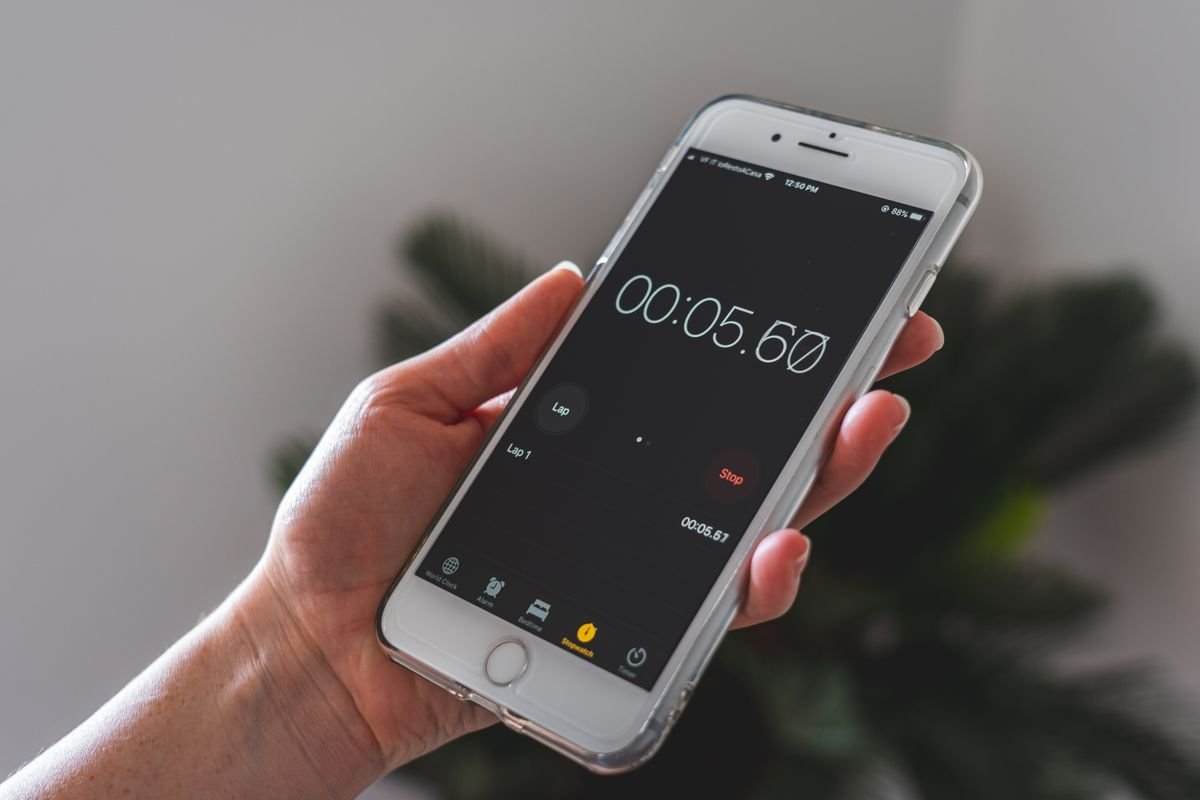
Turn off wifi on your phone, use mobile data only, and load your homepage as if you had never seen it before, ideally somewhere with an average signal rather than standing next to the router. Time it with a stopwatch, not a feeling. Anything past three seconds is the point where Google's own research says you start losing more than half of the people who were about to become customers.
Then look at what is loading. Open your site's page speed report (Google's PageSpeed Insights is free and needs only your web address) and read the list of what is slowing things down. It is almost always the same handful of causes: oversized images, plugins nobody uses anymore, and tracking scripts stacked on top of each other.
You do not have to fix all of it today. You have to know the number, because right now most small business owners do not, and a number you cannot see is not a number you can improve.